

What is lead enrichment? Maximizing your CRM data
Anastasia Chechkova
February 19, 2024
7 min read



Effective selling depends on having a consistent flow of quality prospects that match your ideal customer profile.
61% of small businesses struggle with lead qualification and prospecting.
But manual prospecting can’t keep up with the speed and quality needed to hit ambitious growth goals.
That’s why many small and medium-sized businesses (SMBs) start exploring lead scraping.
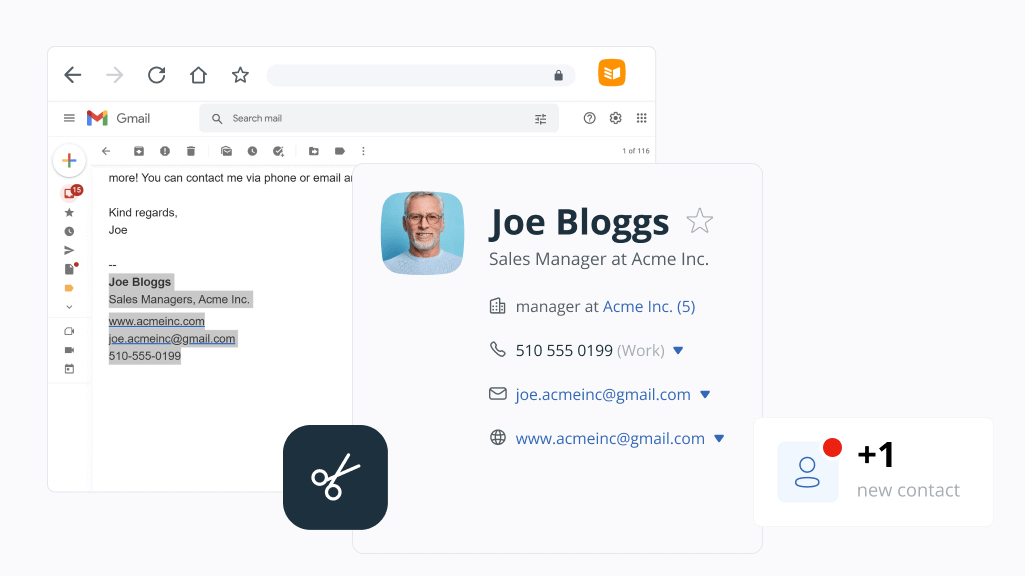
Lead scrapping tools help you automatically capture contact data from across the web and fill your CRM with new leads.
In this blog post, we’ll describe what lead scraping is, how to make it work, and what tools to use.
Instead of manually searching for potential customer information online—a painstaking process—lead scraping tools crawl the web and extract data. This data includes names, emails, phone numbers, job titles, company details, and more.
By using lead scraping tools, small and medium-sized businesses can save time on lead generation, master targeted outreach, and focus on other business activities instead.
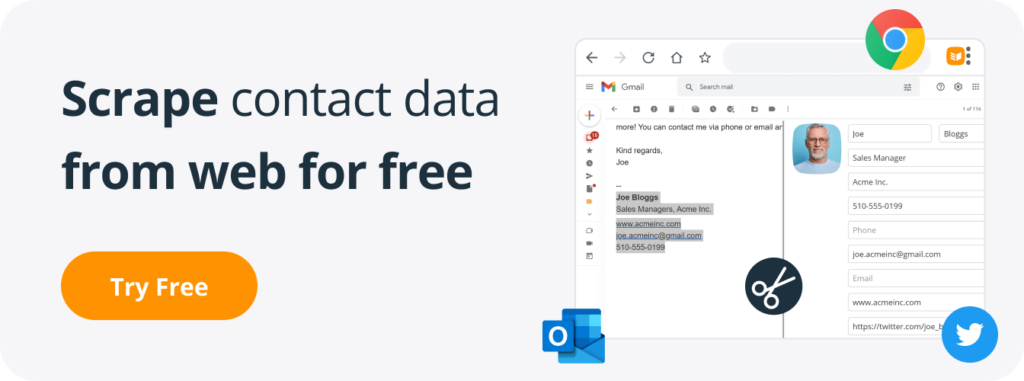
Depending on what you want to achieve, you can use lead scraping tools to scrape publicly available data to find all marketing managers at SaaS companies headquartered in New York City with 50-200 employees. Within minutes, hundreds of matched contacts are aggregated into a spreadsheet for outreach.
If you’ve never done lead scraping, it might take you time to create a process that works for you.
To nail the process of lead scraping, consider these steps.
Lead scraping is most effective when you target the right audience.
As with any other prospecting technique, by using lead scraping, you want to fill your sales pipeline with high-quality leads.
This is why your process should start with a clear understanding of who your ideal customer is.
Start by figuring out who you want to reach.
Are you aiming for local businesses? Tech startups? Or maybe freelance graphic designers?
Where do these leads spend the majority of their time: on social media, professional forums, or somewhere else?
Before using a lead scraping tool, get to know your customer.
Depending on your needs, you might not want to spend time setting up an all-in-one sales intelligence platform.
That’s why it’s important to find a lead scraping tool that works for you.
Here are a few things to keep in mind:
Simply adding lead contact details to your CRM is not enough to ensure your sales success.
You need to organize these leads for better prioritization by adding tags or statuses (or even one-sentence notes) to your new CRM contacts.
For example, you find a potential lead on social media.
From their recent post, you see that they are looking for a marketing solution for their newly founded business. As a marketing consultant, you are pretty sure you can help them not only find the right tool but also make the most out of it.
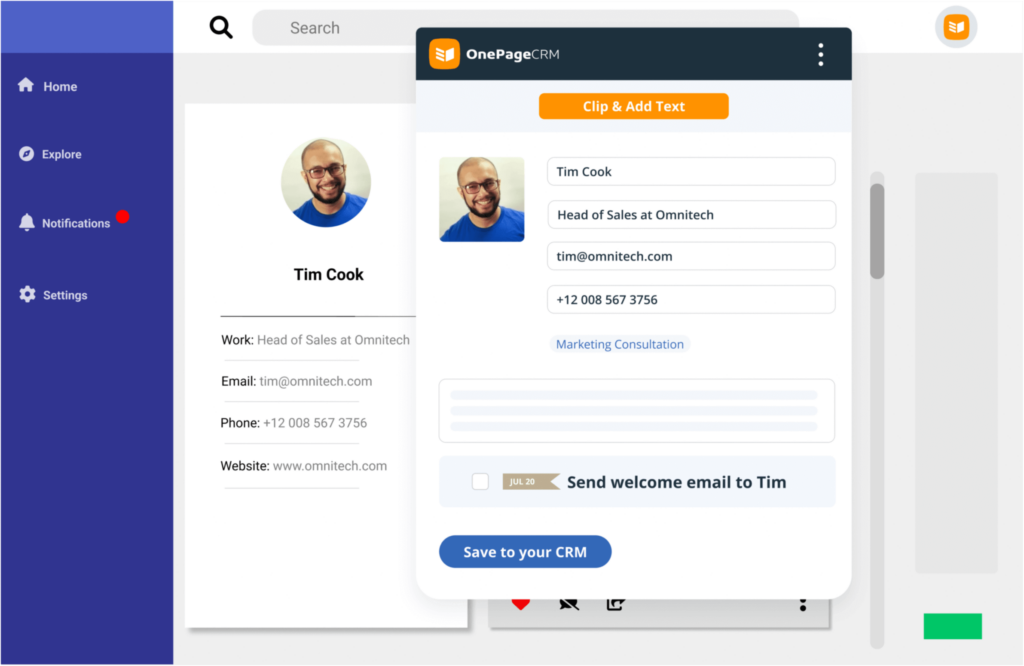
With a simple click, you can scrape the lead’s contact details and automatically create a new contact in your CRM.
But there’s more: you can also add a “Marketing consultation” tag to this new contact.
This way, you’ll be able to send an introductory email in one go to all of your new leads who might be interested in marketing consultation.
It’s great that you’ve got a growing list of leads—but this is only the start of your lead-scraping process.
If you don’t reach out and initiate a conversation, these leads might not even learn about your existence let alone convert into your paying customers.
This is where lead qualification begins.
If you’re wondering how to break the ice, consider a personalized message that reflects your understanding of their business needs… or maybe comment on a recent company milestone they’ve hit.
Make sure that your first message doesn’t feel like they’re just another name on your long impersonal list.
It’s fine to use lead scraping tools to automate the manual process of populating your CRM—but your outreach still needs a personal touch.
After all, people buy from people.
Following up isn’t just a courteous nudge; it’s where the real sales dance begins. Multiple touchpoints can turn maybe into a yes.
Without consistent and thoughtful follow-ups, the spark of initial interest from leads will fade into the noise of their busy inboxes.
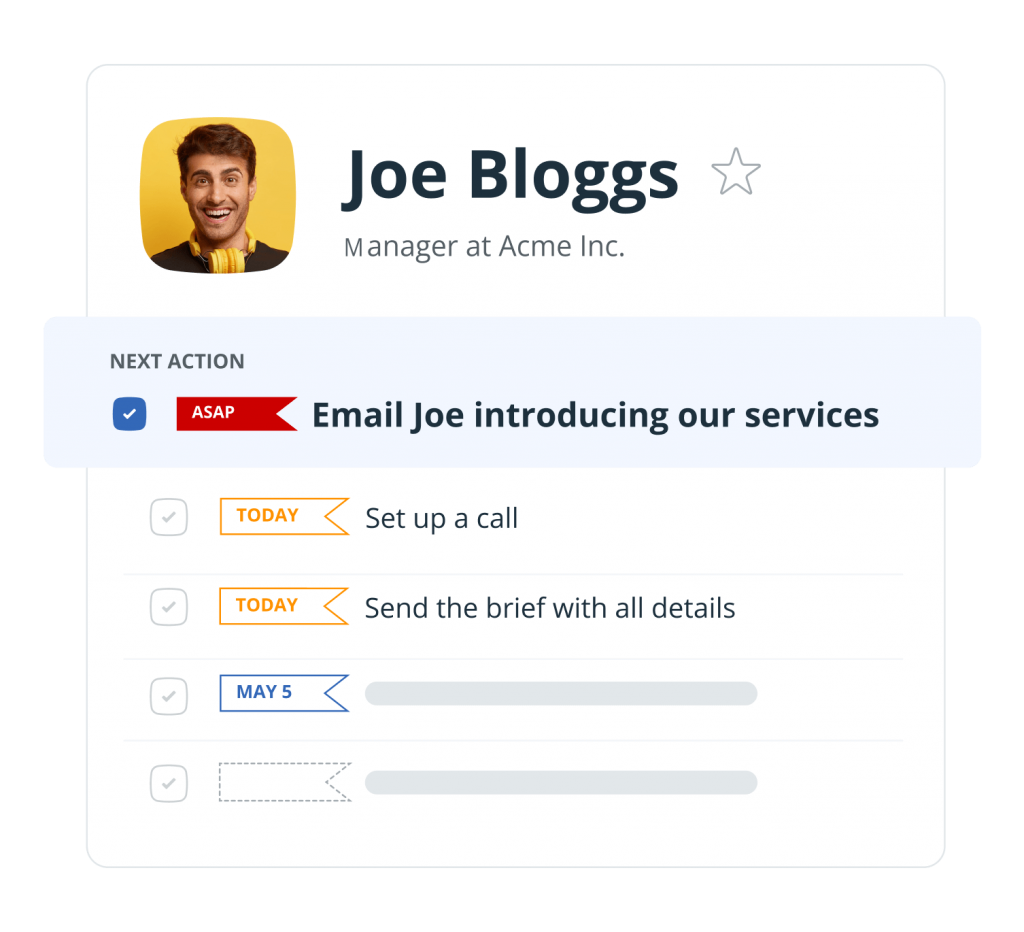
Mix up your approach to avoid sounding like a broken record.
Send them a relevant case study, drop a gentle reminder, or share a link to the latest research findings that could help their business.
Show them that you’re here to consistently offer value, not just ask for their time.
Prospect data is scattered across the vast expanse of the internet.
But if you know where your ideal customer profiles spend the majority of their time, you can make the most out of your lead scraping.
Here are a few places where you can scrape leads:
The online possibilities for lead scraping are expansive.
However, you can combine the best of both worlds: online and offline.
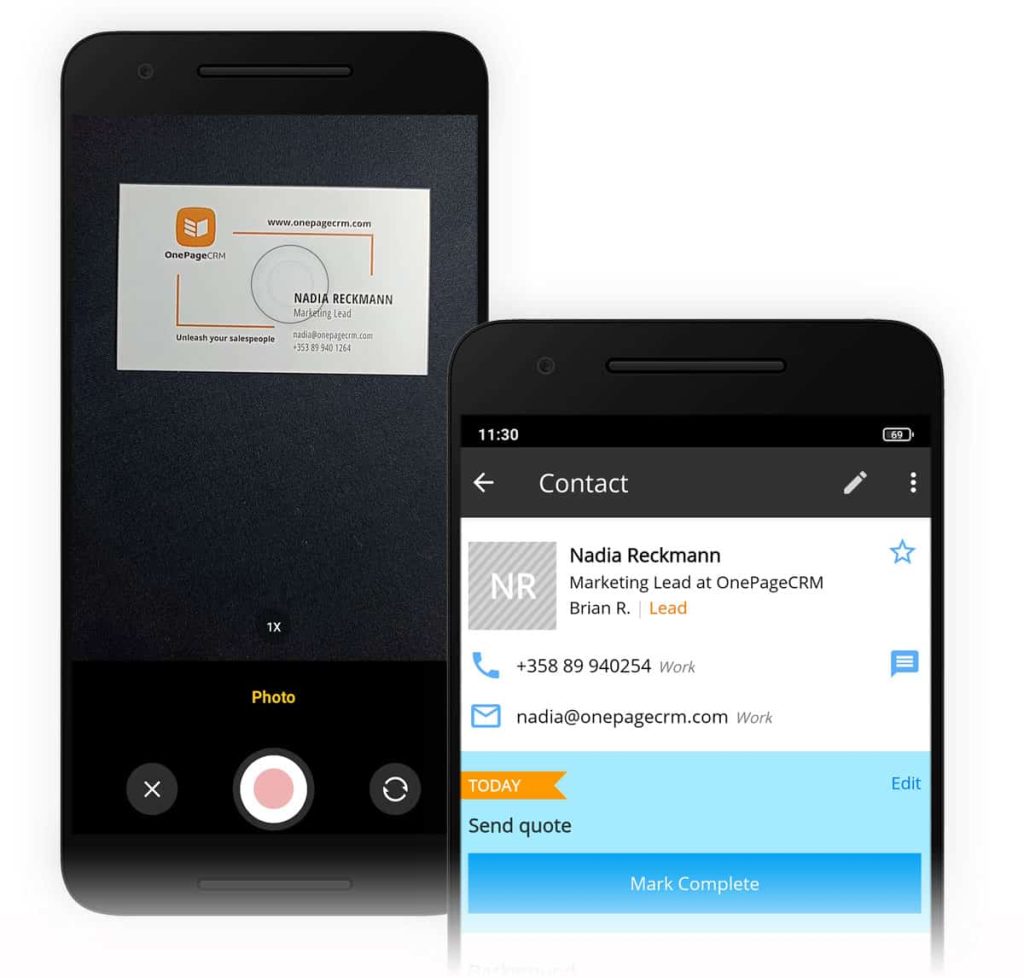
Even in a digital age, face-to-face has its charm. If you regularly attend networking events and conferences, you can collect physical business cards of prospects and leads and then easily scrape them with a digital Business Scanner.
To scale your sales efforts, you need to have a powerful prospecting machine.
Here are five top benefits lead scraping offers:
With lead scraping tools, you can generate high-quality leads at scale as fast as possible. The best lead scraping tools seamlessly connect with your CRM and help you fill your pipeline quicker.
For small and medium-sized businesses looking to supercharge their lead gen in 2026, here are the top 5 lead scraping tools.
Lead Clipper is a free browser extension developed by OnePageCRM.
It’s easy to use and lets you quickly scrape leads from any publicly available web page.
Just install the extension, browse sites relevant to your prospecting targets, and click to clip the prospect data you want to save in your CRM.
Lead Clipper will automatically create new contacts in your CRM account. This way, you’ll avoid manual copy-pasting.
Key advantages of Lead Clipper:
If you appreciate a bit of automation magic, Phantombuster is your ally.
This tool automatically extracts lists of leads from social media platforms and is relatively straightforward to set up.
Key advantages of Phantombuster:
Octoparse democratizes data extraction for non-tech users.
It allows users to point and click to collect data from websites without having to write a single line of code.
Key advantages of Octoparse:
ScraperAPI is designed to handle web scraping at any scale, from just a few requests a day to millions. It bypasses the need to set up proxies and browsers.
Instead, you can easily get started with simple API calls.
Key advantages of ScraperAPI:
If you’re looking for mass cold outreach campaigns, Apollo is your go-to platform.
It’s not a traditional web scraping tool but rather a lead generation platform.
It’s mostly used by newly founded companies for sending cold outreach to outbound leads. It’s especially popular in B2B sales and account-based lead generation.
Key advantages of Apollo:
While manual prospecting is still required to verify quality, lead scraping tools significantly accelerate the process of filling the top of your sales funnel.
Combined with a CRM, lead scraping provides an efficient process for fueling sales pipelines with high-quality prospects and leads.
Getting the right lead scraping tool isn’t just a nice-to-have—it’s a game changer for busy sales teams, especially in small to medium-sized businesses.
Here’s a summary of how to make lead scraping work for your business: