

17 CRM tools: Which is best for small business in 2026?
Samuel Oyebode
December 10, 2025
30 min read



Communication with customers is an important part of any business, big or small.
That’s why as soon as a business outgrows spreadsheets, companies start looking for a Customer Relationship Management (CRM) system.
But there are usually three problems with this search:
So it’s no surprise that many small businesses are looking for a CRM system without bells and whistles.
No extra features mean affordable pricing, no learning curve, easy setup, and productivity gains… All of this sounds like a dream, especially since the three letters of CRM usually send shivers down the spine of many small business owners and salespeople.
Now, you might be thinking “How do I find a CRM without bells and whistles?”
This blog post will provide the answer and introduce you to the à la carte approach.
Have you ever been hooked by a great ad for a new tool only to be disappointed later?
If yes, you’re not alone.
We live in the era of cognitive overload, so many tools promise much-needed simplicity and ease of use. But when you open them for the first time, you suddenly feel overwhelmed. The main reason behind this overwhelm is the drastic difference between a simplified interface in an ad and… well, reality.
That’s the situation many of us find ourselves in regularly.
There’s a reason for this feature bloat. Building a tech product is not an easy task. Eventually, users start asking for more and more features. However, a good product team tries to understand what users need and also knows when to stop.
In sales, there’s an age-old wisdom: “If everyone is your customer, then no one is.”
This can be extrapolated to a CRM system:
“If your CRM can do everything, it can do nothing well.”
After all, the master of all is the master of none.
So if a CRM is promising to replace all other apps, you might want to think twice whether it’s the right choice for you. To answer this question, let’s look at a simple analogy:
Which CRM do you need?
Take a moment to think back on the first time you opened Salesforce or HubSpot. Suddenly, you were faced with so many buttons and fields that it felt like they were there to launch a space shuttle.
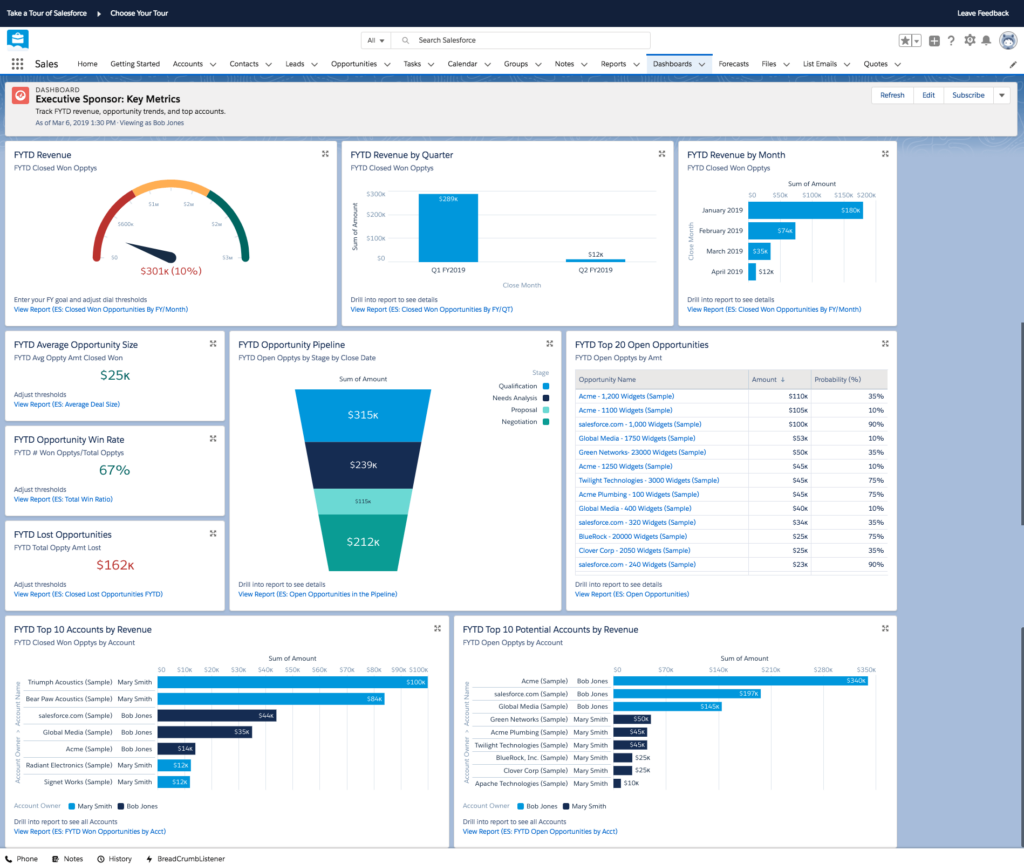
This complexity is understandable.
A multi-national corporation with teams of thousands of people on different continents and across different time zones is not an easy thing to manage.
We’ll make a wild guess but due to the complexity of its organization, a large business probably needs as many buttons as a control console in a space shuttle.

But does your small business need this?
For a large corporation with dedicated teams for each function, the variety and complexity of features are a goldmine. But for a small business, they’re more like a minefield.
If you were to end up with a space shuttle, you probably wouldn’t find much use for it in your everyday life. To get from place A to place B, you need a car. It’ll be a faster, better (and cheaper!) option than a space shuttle (unless you need to go to space, of course).
In other words, a simple CRM will get your business much further than a CRM with bells and whistles.

For having a space shuttle instead of a car, you’ll be paying with your mobility. Let’s be honest: you can’t just hop into a space shuttle and go to a nearby city for a client meeting.
This immobility slows down your business growth. This is one of the biggest dangers of a CRM with bells and whistles.
But there are a few more dangers lurking behind this big one:
We all know these apps that promise to replace everyone else and become all-in-one solutions for everything you might ever need. It’d be better if different apps worked more closely with each other instead of competing. For example, no matter how good your CRM system is, you’ll still need a proper accounting tool.
This is what the à la carte approach is about. Just like in a restaurant where you pick only the dishes you want, this approach lets you connect to your CRM only the apps you need.
OnePageCRM is a great example of this philosophy.
Instead of trying to be a jack-of-all-trades (and master of none), this CRM focuses on doing one thing really well—selling. For everything else? It integrates with best-in-class apps that specialize in those areas.
This approach offers several advantages:
The learning curve is much smoother because instead of being overloaded with extra features, OnePageCRM speaks directly to different apps and seamlessly pulls data from them.
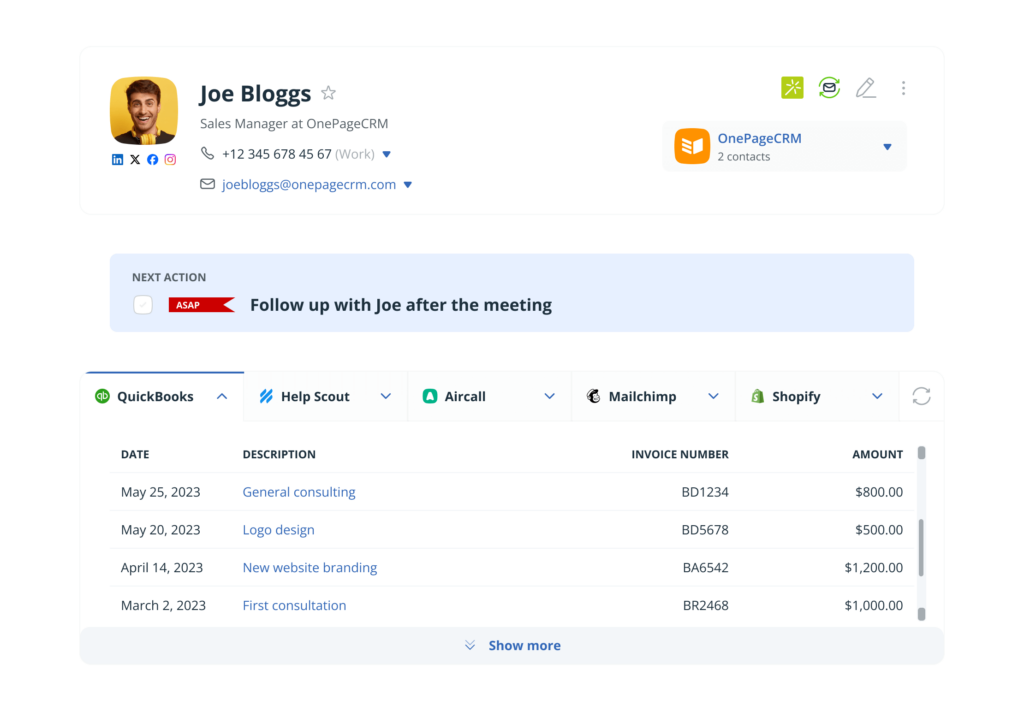
Choosing an à la carte CRM system allows you to avoid feature bloat and the bells and whistles of the majority of CRMs. This helps you focus on what truly matters—growing your business.
Sometimes, less is more, especially when you’re a small business looking to make a big impact.