

How to scale a small business: 11 tips and common mistakes
Guest Author
April 10, 2023
15 min read



Running a small online shop isn’t an easy task.
Every day you talk to buyers, seal deals, pack boxes, reply to messages, check stats, and keep an eye on the cash in and out.
That’s why eCommerce businesses need proper tools.
Of course, loads of options exist. Yet, choosing the best ones is not very straightforward. Particularly when overspending isn’t on the table, nor is bringing on a whole IT team just to be able to use a tool.
Small businesses thrive when they use tools built to nail just one job, work smoothly alongside other apps, and scale as their customer base expands.
In this blog post, we’ve collected five essential tools that do different types of jobs: setting up online stores, growing sales, sending emails, providing customer service, and also simplifying shipping.
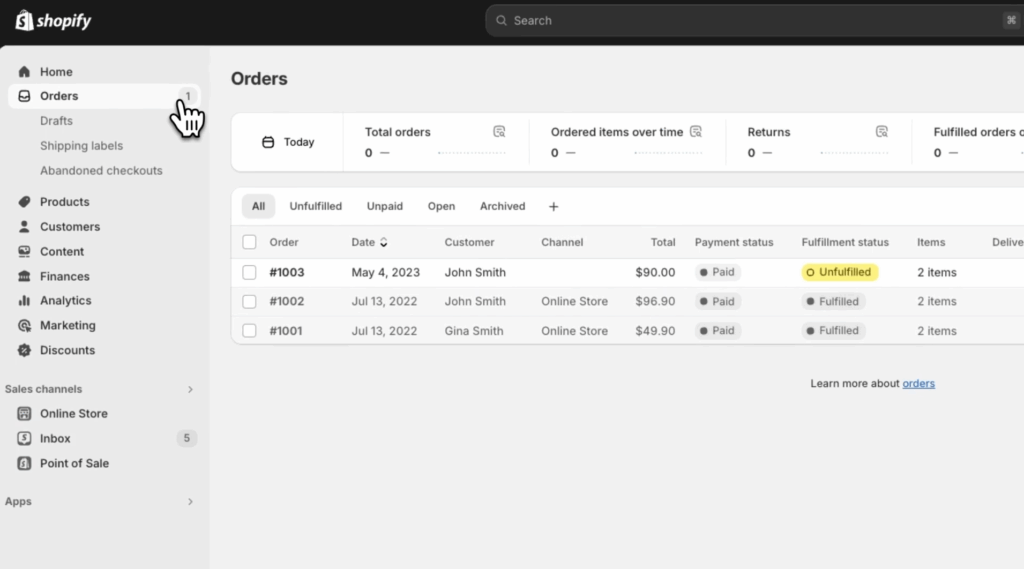
Pricing: Priced between $29 and $2,300 per month, Shopify offers a wide range of tools for eCommerce businesses of all sizes.
Best for: Starting an online shop with an easy eCommerce platform.
Key Features:
Choose a design, tweak it, and add items. That’s how quickly you can get your online shop up and running. Shopify is an all-in-one eCommerce platform. It automatically handles hosting, security updates, and performance optimization.
You can begin accepting payments immediately using Shopify Payments or connect a different payment method. Stock levels adjust automatically on your site. The physical store and online shop are always in sync. And if you need extra tools, the Shopify marketplace has a lot of integrations to offer.
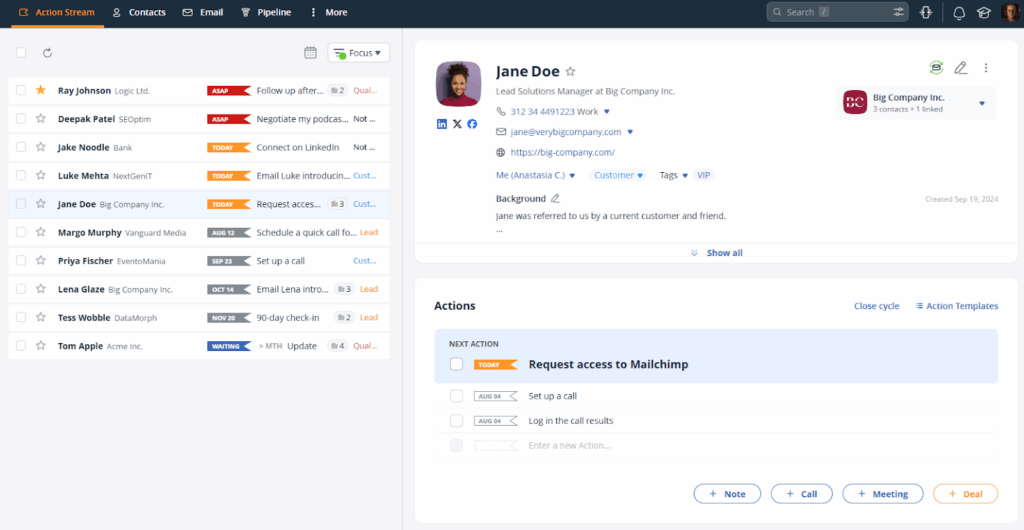
Pricing: Starting from $9.95/month, OnePageCRM is one of the most affordable CRMs for small businesses.
Best for: Small eCommerce businesses that value long-term relationships with customers.
Key Features:
OnePageCRM is a tool designed for busy business owners and salespeople. It organizes your whole database into a dynamic and easy-to-follow list with follow-up reminders, automatically prioritized and color-coded.
Even if you’re not a natural salesperson, this CRM will help you grow your eCommerce business. You can send emails directly from OnePageCRM, track email opens, keep a record of past conversations, and much more. It also offers free web forms that you can embed on your website.
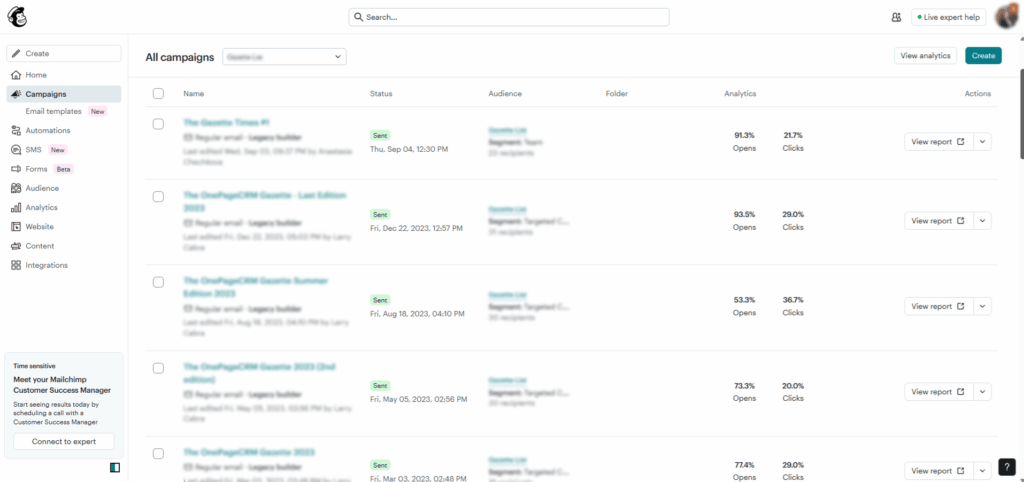
Pricing: Starts with a free edition, but can cost up to $300/month depending on the number of recipients and features you need.
Best for: Traditional email marketing campaigns, solid feature set, and a wide pool of integrations.
Key Features:
Mailchimp is one of the biggest marketing automation platforms. As an industry leader, it’s been around for many years and can offer a variety of features for a small eCommerce business. While some might argue that it’s not the most user-friendly solution, Mailchimp still has thousands and thousands of customers all over the world.
While Mailchimp pricing might seem expensive at first, it’s also possible to manage costs if you do regular database audits. Mailchimp charges you only for active subscribers, so if you can clean your email marketing list by removing inactive or non-responsive customers and leads.
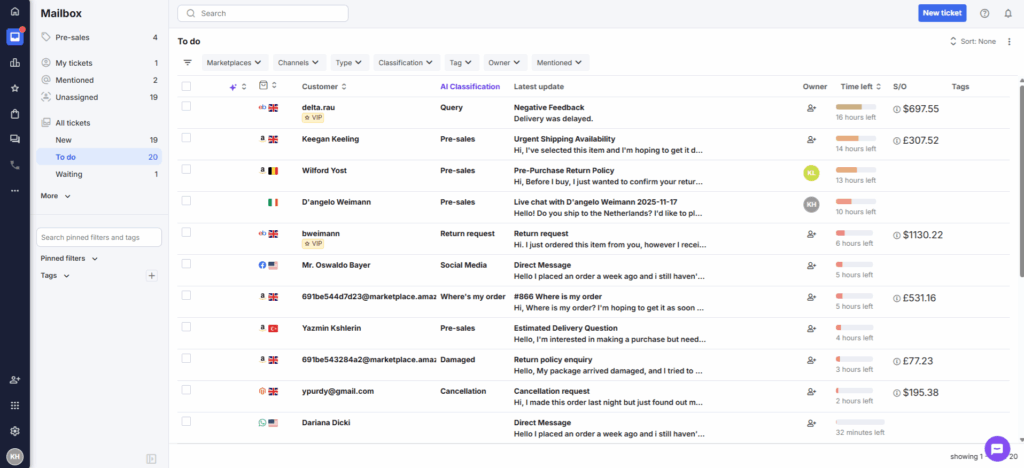
Pricing: Starts from $39 per agent/month.
Best for: eCommerce businesses with multiple customer communication channels.
Key Features:
Advertised as the only customer support help desk built for eCommerce businesses, eDesk is a powerful message compiler, bringing all customer communication under one roof. It is also fully integrated with different eCommerce platforms.
eDesk centralizes different aspects of customer support. The tool has solid reporting features to give you a clear picture of team performance and the quality of your customer service. Many eCommerce businesses also highlight the responsiveness of the eDesk support team.
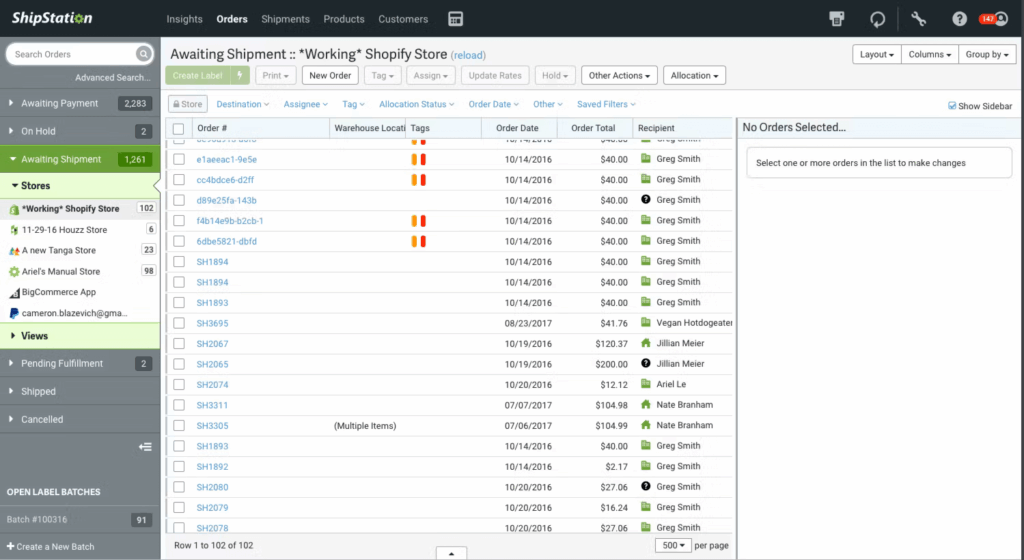
Pricing: Starts from $14.99/month on the entry plan. There’s also a free plan available.
Best for: eCommerce businesses that need to manage shipping and logistics.
Key Features:
ShipStation handles the whole shipping process from alerting you about orders to getting them delivered. All of the orders your customers place online automatically show up in ShipStation. It’s easy to compare rates across hundreds of carriers and find the lowest shipping cost.
However, many report that ShipStation customer support is not very responsive or fast.
Small online stores often rely on various apps. Large eCommerce businesses usually opt for all-in-one systems, which can be cumbersome and slow.
That’s why in this article, we compiled different simple tools that are easy to use and have fairly extensive integrations.
For example, your online store on Shopify shows items and handles sales. Meanwhile, OnePageCRM keeps track of customers and reminds you when to check in. Instead of just sending emails, Mailchimp helps guide potential buyers and brings them back later. eDesk steps in to fix problems no matter where they pop up, be it email or chat. At the same time, Shipstation takes care of packing and sending out your orders without delays.
These tools can be integrated either directly or via Make.com and Zapier. However, if you’re just starting out, you don’t need to set up all of these tools simultaneously. Begin with the worst daily hassle you’re facing right now.
When marketplace support feels like a total mess, have a look at eDesk. Missing follow-ups? That’s where OnePageCRM steps in. Shipping issues? Shipstation might fix that. Add tools to your eCommerce processes one at a time.
Before committing to any eCommerce tool, make sure you trial it with actual company information and your daily use cases. See how well they do the job and connect with your other apps.
It’s important to pick the software that scales alongside your eCommerce business.